Carmel, IN — Advanced Implant Technology
Every implant we place is planned in 3D before the first drill touches bone. Computer-guided precision means safer surgery, faster recovery, and results that are right the first time.
What Is Guided Implant Surgery?
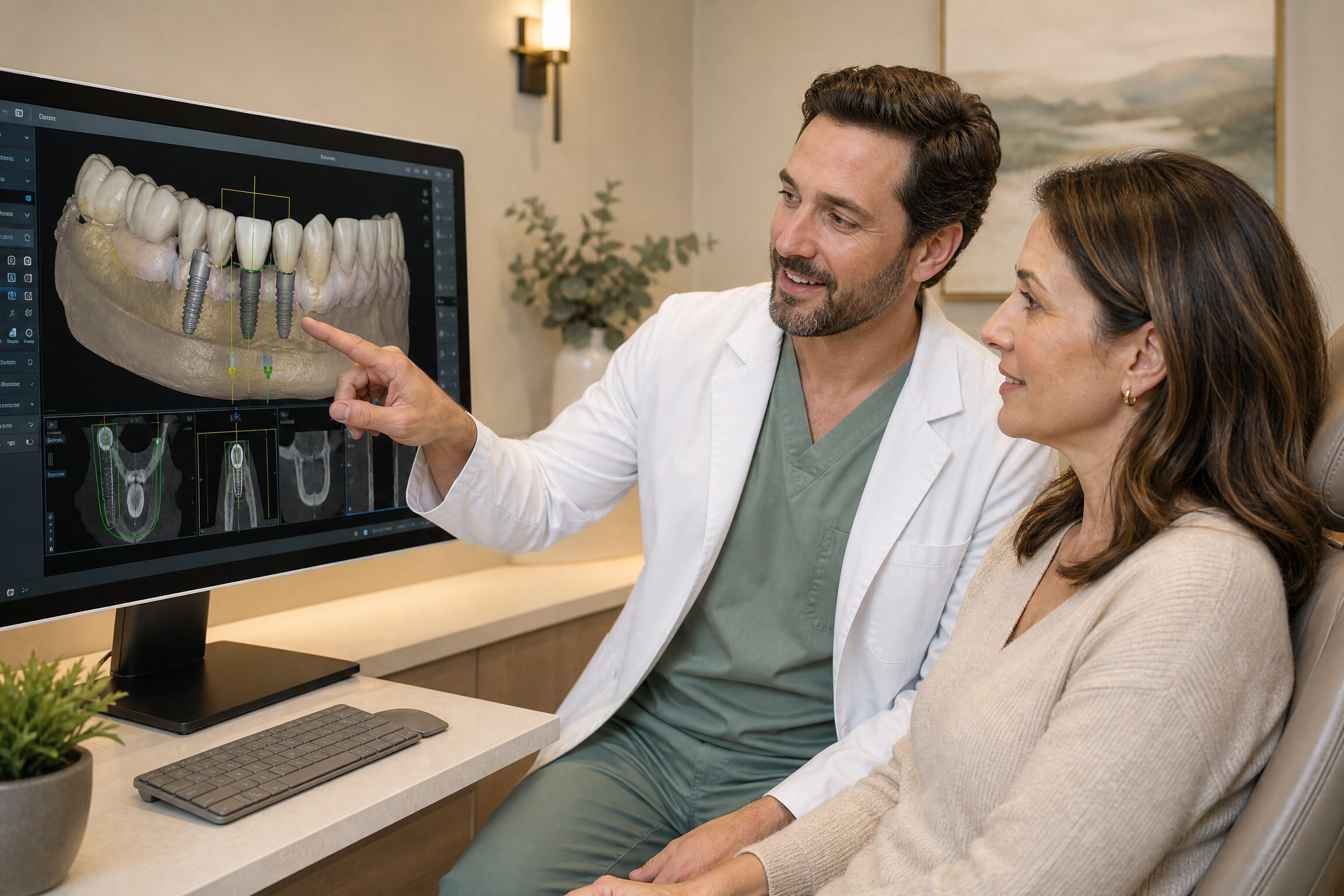
Guided implant surgery is a computer-assisted technique in which a 3D CBCT scan and digital planning software are used to virtually plan the exact position, angle, and depth of each implant before surgery begins. A custom surgical guide is then fabricated and used during the procedure to place the implant precisely according to the plan.
The result is a procedure that is faster, more accurate, and less traumatic than traditional freehand placement. Because the surgeon knows exactly where every drill pass will go, there are fewer surprises, less tissue manipulation, and a more predictable outcome.
At Carmel Family Dental, guided surgery is our standard for all implant placements. It is not an upgrade — it is how we do things.
Guided Surgery — At a Glance
The Technology Behind Guided Surgery
Guided implant surgery combines three advanced technologies to plan and execute implant placement with a level of accuracy that was not possible even a decade ago.
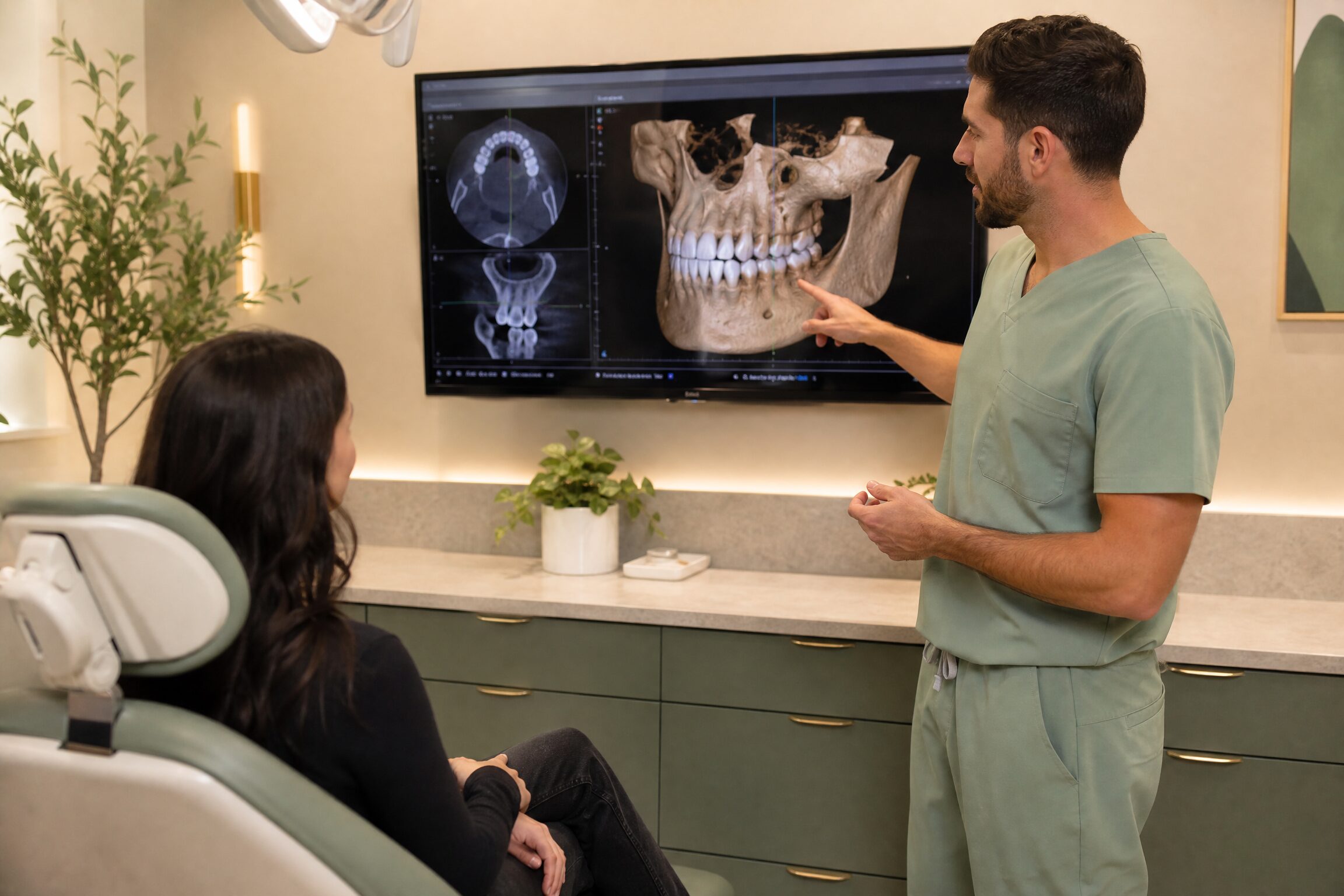
Cone beam CT scanning produces a full 3D image of the jaw, showing bone volume, density, nerve pathways, and sinus anatomy. This is the foundation of every guided surgery plan — we see everything before we start.
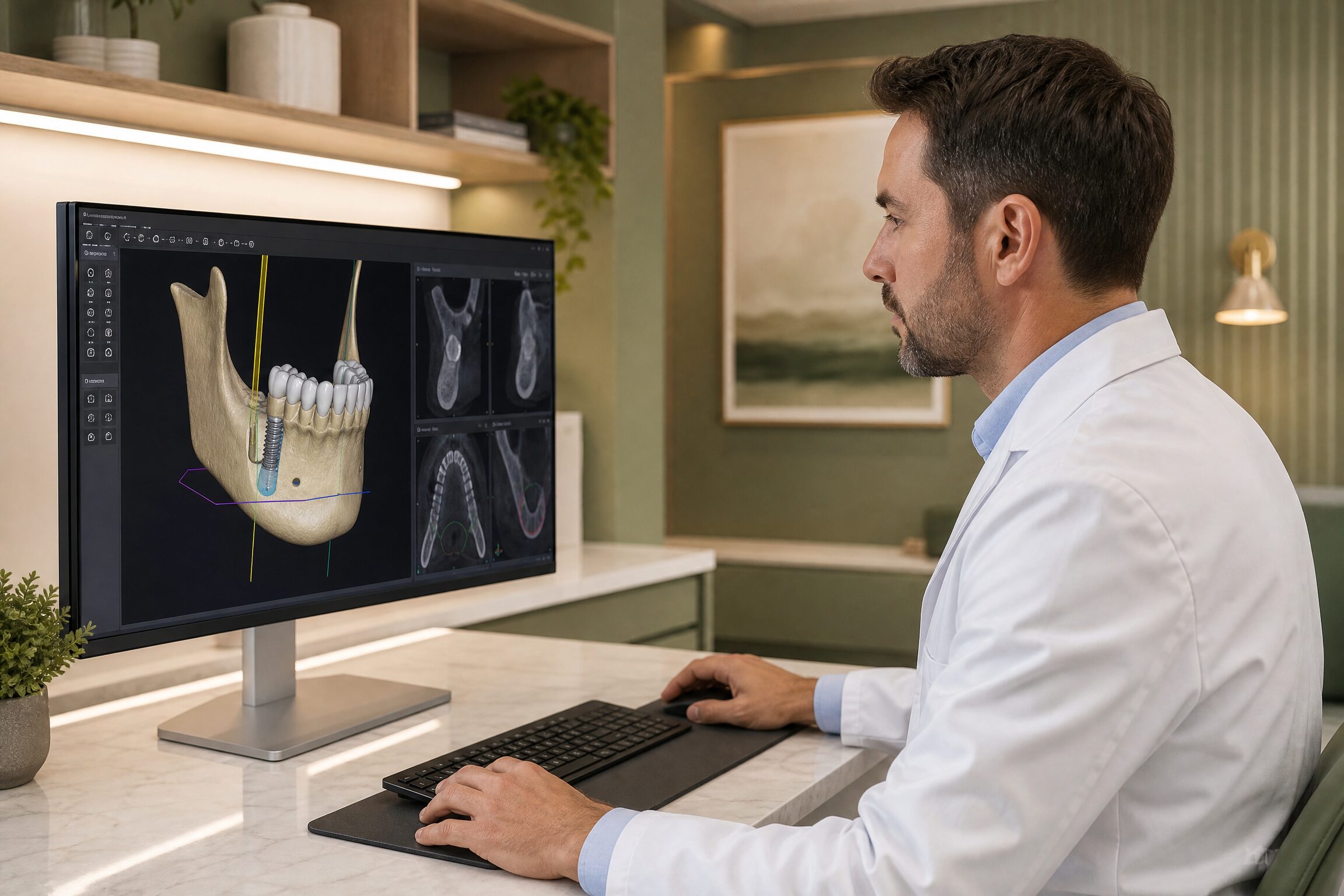
The CBCT data is imported into 3D planning software where virtual implants are placed at the optimal position, angle, and depth. The final restoration is designed simultaneously so the implant position supports the best possible crown outcome.
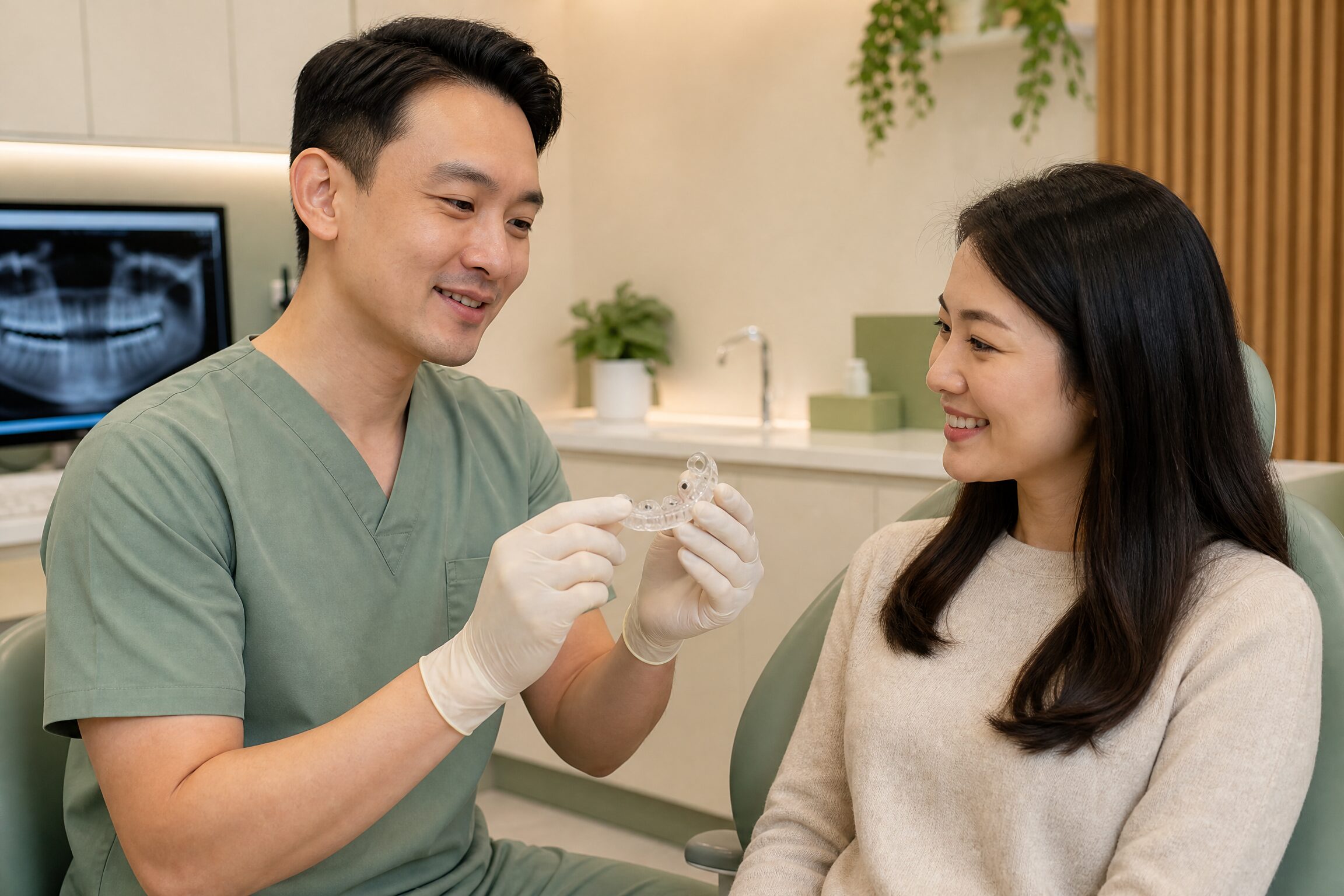
A custom-fabricated surgical stent is created from the digital plan. During surgery, this guide fits over the teeth or gum tissue and physically constrains the drill to the planned trajectory — ensuring the implant is placed exactly where planned.
Is Guided Surgery Right for You?
Guided surgery benefits all implant patients, but it is especially valuable in certain situations where precision is critical.
Patients with bone near the inferior alveolar nerve, maxillary sinus, or adjacent tooth roots benefit most from guided placement, where millimeter-level accuracy is essential.
When placing 2, 4, or 6 implants simultaneously — as in All-on-4 or All-on-6 procedures — guided surgery ensures all posts are positioned to support the final arch correctly.
Patients who want the shortest possible surgical appointment benefit from guided surgery, which eliminates intraoperative decision-making and reduces total chair time.
Many guided surgery patients qualify for flapless placement — no incision, no sutures — which means less post-operative discomfort and a faster return to normal activity.
Patients who are anxious about surgery find comfort in knowing the entire procedure has been planned and rehearsed virtually before they sit in the chair.
For patients who want the most predictable, accurate, and long-lasting result, guided surgery is the gold standard approach to implant placement.
Your First Appointment
The consultation is a thorough planning session. We take a CBCT scan, review your bone volume and anatomy, and begin designing your implant plan. You leave with a clear picture of exactly what the surgery will involve.
A low-radiation cone beam CT scan provides a complete 3D view of your jaw, bone, nerves, and sinuses
We measure available bone at each implant site and determine whether bone grafting is needed before placement
Implants are virtually placed in 3D software at the optimal position, angle, and depth for your anatomy and restoration
A custom surgical stent is designed from the digital plan and fabricated before your surgery date
We review sedation options — local anesthesia, oral sedation, or IV sedation — based on your comfort level and procedure complexity
We verify your PPO benefits and discuss CareCredit options before you leave
The Process
From your first consultation to your final restoration, every step of the guided surgery process is designed to be predictable, comfortable, and efficient.
3D imaging, bone assessment, anatomy review, treatment plan discussion
Virtual implant placement designed in 3D software, restoration outcome planned simultaneously
Custom stent fabricated from the digital plan — takes approximately 2–3 weeks
Implant placed using the surgical guide for precise, predictable positioning. Flapless option available
3–6 months for the implant to fully integrate with the jawbone before restoration
Custom crown, bridge, or denture placed to complete the implant and restore full function

With guided surgery, by the time you sit in the chair for your placement appointment, the hard work is already done. The 3D plan has been reviewed, the surgical guide has been fabricated, and every drill pass has been rehearsed virtually. The surgery itself is fast, precise, and predictable.
Most single-implant guided surgeries take 45 to 90 minutes. Many patients are surprised by how straightforward the experience is — and how quickly they recover.
Guided vs. Traditional
Both approaches can produce excellent results in experienced hands. Guided surgery consistently delivers higher accuracy, shorter surgery time, and a more predictable outcome.
| Feature | Guided Surgery | Traditional Freehand |
|---|---|---|
| Pre-Surgical 3D Planning | ✓ Yes — full virtual placement | 2D X-ray only |
| Placement Accuracy | ✓ Within 0.5mm | Variable — depends on surgeon |
| Flapless Option | ✓ Available in most cases | Rarely possible |
| Surgery Time | ✓ Shorter — plan eliminates intraoperative decisions | Longer — decisions made during surgery |
| Post-Op Discomfort | ✓ Less — less tissue manipulation | More — more tissue handling |
| Nerve/Sinus Risk | ✓ Minimized — visualized in 3D plan | Higher — estimated from 2D imaging |
| Predictability | ✓ Highest available | Good — but less predictable |
Why Carmel Family Dental
Dr. Schraeder has placed over 800 implants using guided surgery protocols. His experience with complex cases — limited bone, multiple implants, full-arch — means you are in expert hands.
We have CBCT 3D imaging in-house. No referrals to imaging centers. Your scan is taken, reviewed, and planned all in one practice.
We plan, place, and restore implants in a single practice. No coordination between multiple providers. One team, one plan, one outcome.
Oral sedation and IV sedation available for patients who want a more relaxed surgical experience. You will feel comfortable throughout the procedure.
CareCredit financing available. We verify your PPO insurance benefits and provide transparent, itemised estimates before treatment begins.
Hundreds of five-star reviews from patients across Carmel, Indianapolis, Zionsville, Fishers, Westfield, and Noblesville.
Patient Reviews
“I was nervous about implant surgery, but Dr. Schraeder showed me the 3D plan before we started. Seeing exactly where the implant would go and how it would look made all the difference. The surgery itself took less than an hour and I was back to work the next day.”
“I had two implants placed using the guided technique. No incisions, no stitches — I honestly could not believe how easy the recovery was. I had mild soreness for two days and that was it. The 3D planning made me feel completely confident going in.”
“My previous dentist told me I did not have enough bone for implants. Dr. Schraeder did a 3D scan and showed me I actually did — the guided plan showed exactly how to place the implant safely. The surgery went perfectly. I wish I had come here first.”

The goal of guided surgery is not just to place an implant — it is to place the right implant in the right position so the final restoration looks and functions exactly like a natural tooth. The 3D planning process ensures that every implant we place is positioned to support the best possible outcome.
We serve patients from Carmel, Indianapolis, Zionsville, Fishers, Westfield, Noblesville, and surrounding communities. Our practice is at 3021 E 98th Street, Suite 240, Indianapolis, IN 46280.
Your Guided Surgery Team

Dr. Stuart oversees the restorative phase of all implant cases, ensuring that every implant placed by the team is positioned to support the ideal crown, bridge, or denture outcome. His expertise in occlusion and aesthetics guides the planning process from the start.
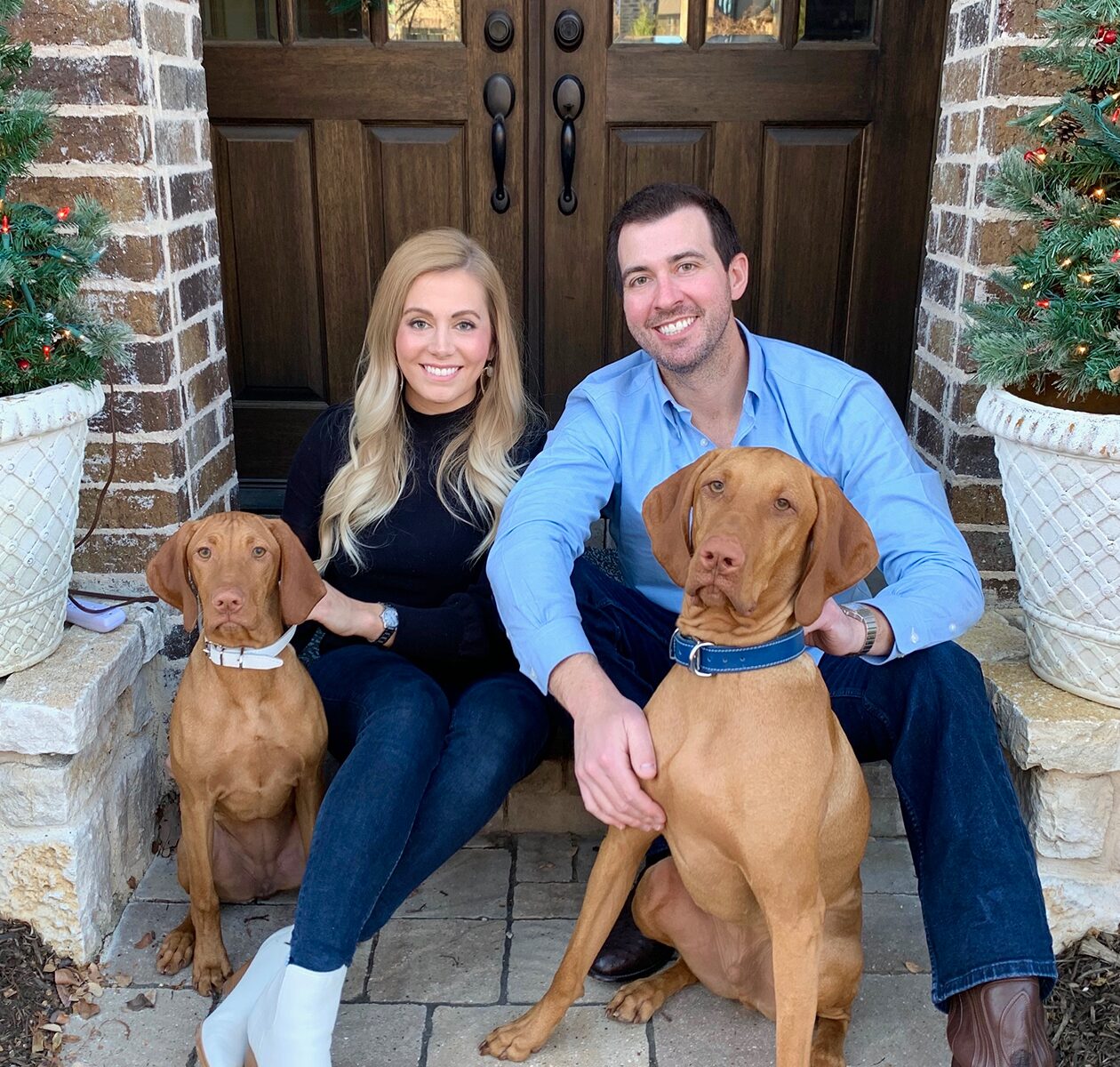
Dr. Schraeder has completed advanced training in guided implant surgery and has placed over 800 implants using computer-guided protocols. His expertise in 3D planning, flapless surgery, and complex implant cases makes him one of the most experienced guided surgery practitioners in the Indianapolis area.
FAQ
Guided implant surgery is a computer-assisted technique in which a 3D CBCT scan and digital planning software are used to virtually plan the exact position, angle, and depth of each implant before surgery begins. A custom surgical guide is then fabricated and used during the procedure to place the implant precisely according to the plan. This approach significantly improves accuracy, reduces surgical time, and minimizes trauma to surrounding tissue compared to freehand placement.
In traditional freehand implant surgery, the dentist uses X-rays and clinical judgment to determine implant position during the procedure. In guided surgery, the entire placement is planned in 3D software before the patient enters the operatory. A custom surgical stent physically constrains the drill to the planned trajectory, ensuring the implant is placed at the exact angle, depth, and position that was determined to be optimal during planning.
Yes. Studies consistently show that guided implant placement achieves significantly higher positional accuracy than freehand placement. The 3D planning process allows the surgeon to visualize bone density, nerve location, sinus proximity, and adjacent tooth roots before making a single incision. This pre-surgical visibility reduces the risk of complications and improves long-term implant success rates.
Yes. A cone beam CT (CBCT) scan is the foundation of guided implant surgery. The CBCT provides a three-dimensional image of the jaw, showing bone volume, density, nerve pathways, and sinus anatomy. This data is imported into planning software where the virtual implant placement is designed. The surgical guide is then fabricated based on this plan.
Most patients report that guided implant surgery involves less post-operative discomfort than traditional placement. Because the procedure is precisely planned, the surgery is typically shorter, requires less tissue manipulation, and in many cases can be performed flaplessly — meaning no incision is needed to reflect the gum tissue. Less tissue trauma means less swelling, less bruising, and a faster recovery.
Most patients who are candidates for dental implants are also candidates for guided surgery. It is particularly beneficial for patients with limited bone volume near critical structures (nerves, sinuses), patients replacing multiple teeth, patients who want the shortest possible surgical time, and patients who are anxious about surgery and want the most predictable outcome possible.
The surgical appointment for a single guided implant typically takes 45 to 90 minutes, which is often shorter than traditional placement. The planning phase — CBCT scan, digital design, surgical guide fabrication — takes approximately 2 to 3 weeks before the surgery date. For multiple implants, surgical time is proportionally longer but still typically faster than freehand placement.
Coverage for guided implant surgery varies by insurance plan. Some PPO plans cover a portion of the implant placement procedure. The CBCT scan and surgical guide fabrication may or may not be covered separately. We verify your specific benefits before treatment begins and provide a transparent, itemised estimate. CareCredit financing is available for any out-of-pocket balance.
Financing & Insurance
We work with most major PPO dental insurance plans and offer flexible financing options to make your implant surgery as accessible as possible.
Planning tip: Many PPO plans cover the implant placement procedure as a surgical benefit, separate from the crown restoration. We verify both components of your coverage before treatment begins so you have a complete, accurate estimate.
Related Services
Carmel Family Dental | 3021 E 98th Street, Suite 240, Indianapolis, IN 46280
Serving Carmel, Indianapolis, Zionsville, Fishers, Westfield, and Noblesville