Indianapolis & Carmel, IN — Custom Restorations
Custom-designed restorations for a natural look in Indianapolis. Whether you need a single crown, a bridge to fill a gap, a partial for several missing teeth, or a full set of dentures — every restoration is designed to look, feel, and function like your own teeth.
Custom-Designed Restorations

The difference between a restoration that looks natural and one that looks obviously artificial comes down to design. Shade selection, tooth shape, gum line proportions, bite alignment — these details matter. At Carmel Family Dental, every crown, bridge, partial, and denture is designed with the same attention to aesthetics that goes into cosmetic dentistry.
We serve patients from Indianapolis, Carmel, Zionsville, Fishers, Westfield, and Noblesville. Our practice is at 3021 E 98th Street, Suite 240, Indianapolis, IN 46280.
Whether you need a single crown to protect a damaged tooth or a full set of dentures to replace an entire arch, the goal is the same: a result that looks like it was always there.
Restorations — At a Glance
Our Restoration Services
Each restoration type serves a different purpose. The right option depends on how many teeth are affected, the health of surrounding teeth, and your long-term goals.

A dental crown is a full-coverage cap placed over a tooth that is too damaged, decayed, or structurally compromised to be restored with a filling. Crowns are also placed after root canal treatment and on implant posts.
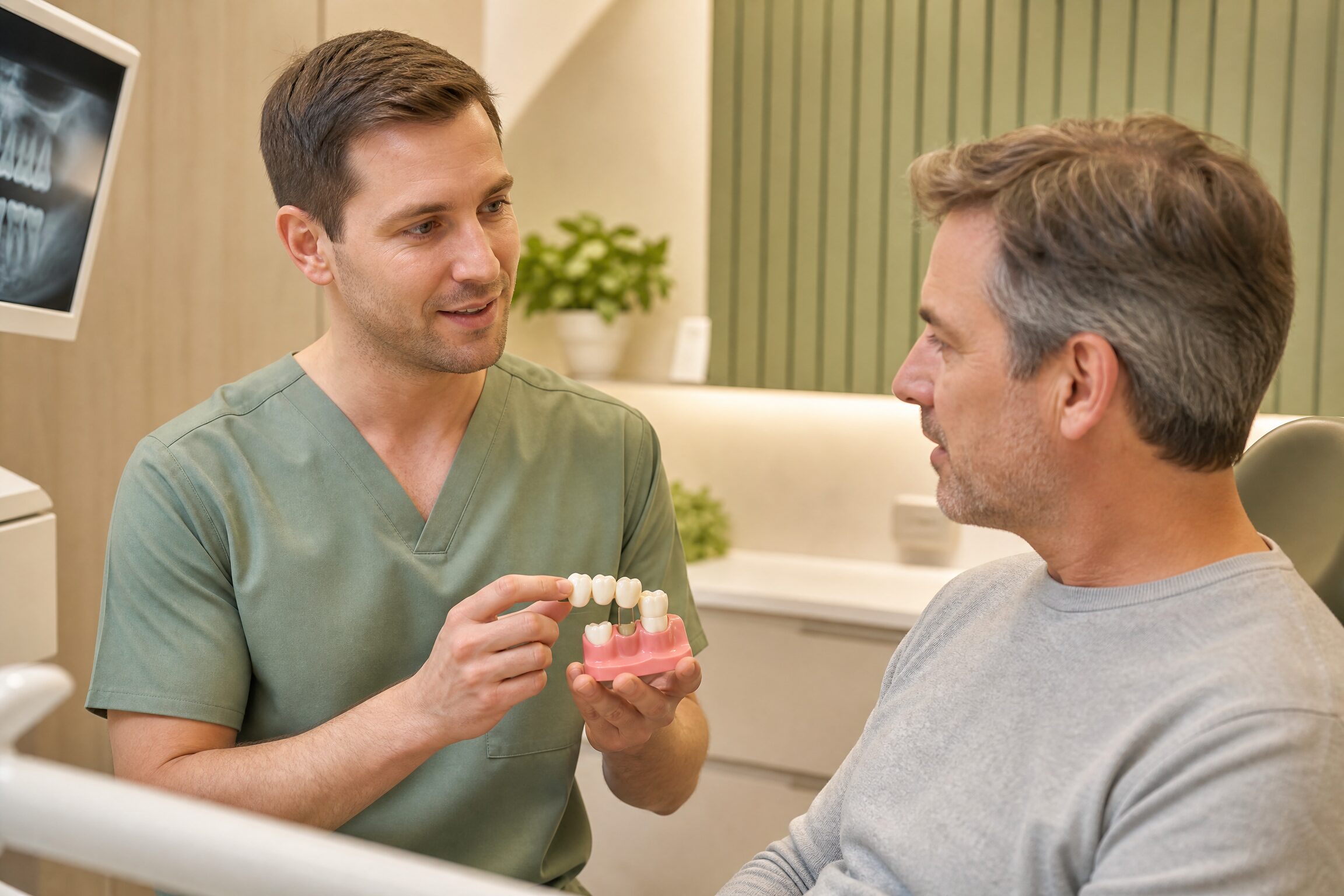
A dental bridge replaces one to three missing teeth by anchoring crowns onto the natural teeth on either side of the gap, with a false tooth (pontic) suspended between them. Implant-supported bridges are also available.

A partial denture replaces several missing teeth in an arch where some natural teeth remain. It clips onto the remaining natural teeth for stability and is removed for cleaning. A well-designed partial is comfortable and natural-looking.

A full denture replaces an entire arch of missing teeth. Custom-designed dentures are crafted to match your facial proportions, skin tone, and natural tooth appearance — so they look like your own teeth, not like dentures.
Is This Right for You?
The right restoration depends on how many teeth are affected and the condition of the surrounding teeth and bone.
A tooth is cracked, severely decayed, or broken; you have had a root canal; an existing crown has failed; or a tooth is structurally compromised and cannot be restored with a filling alone.
You are missing one to three teeth in a row, the adjacent teeth are healthy and strong enough to support crowns, and you want a fixed (non-removable) restoration without implants.
You are missing several teeth in one arch but still have healthy natural teeth remaining. A partial is a removable, affordable option that prevents remaining teeth from shifting.
You are missing all or most of the teeth in one or both arches, or the remaining teeth are failing and need to be extracted. Dentures can be conventional, immediate, or implant-supported.
Your existing crown, bridge, partial, or denture is cracked, loose, broken, ill-fitting, or more than 10 years old and showing signs of wear or aesthetic deterioration.
Your current denture or partial is uncomfortable, slipping, or causing sore spots. We offer relining, adjustment, and replacement services to restore comfort and function.
Your First Appointment
Your consultation is a comprehensive examination and planning session. We examine the affected teeth, assess the bite and surrounding structures, review your aesthetic goals, and present the restoration options that are appropriate for your situation.
Full exam of the affected teeth, gums, bite, and adjacent structures — the foundation of every restoration plan
Digital X-rays to assess bone levels, root health, and the condition of adjacent teeth — essential for accurate diagnosis
We review shade guide options and tooth shape preferences to ensure the restoration matches your natural teeth and meets your aesthetic expectations
We present all appropriate options — material choices, fixed vs. removable, implant-supported vs. traditional — with the pros and cons of each
A clear timeline showing the number of appointments, the sequence, and the expected completion date for your restoration
We verify your PPO benefits and discuss CareCredit options before you leave so you have a complete financial picture
The Process
The process varies by restoration type. Here is the general sequence for the most common restorations we provide.
Examination, X-rays, shade discussion, restoration options, treatment plan, insurance verification
Crown/bridge: tooth shaped under local anesthesia. Denture/partial: impressions and measurements taken
Digital or physical impressions sent to the dental lab. Custom restoration designed to your specifications
Temporary crown or partial placed while the permanent restoration is fabricated (2–3 weeks)
Permanent restoration tried in, adjusted for fit, bite, and aesthetics before final placement
Crown cemented, bridge bonded, or denture/partial delivered with care instructions and follow-up scheduled
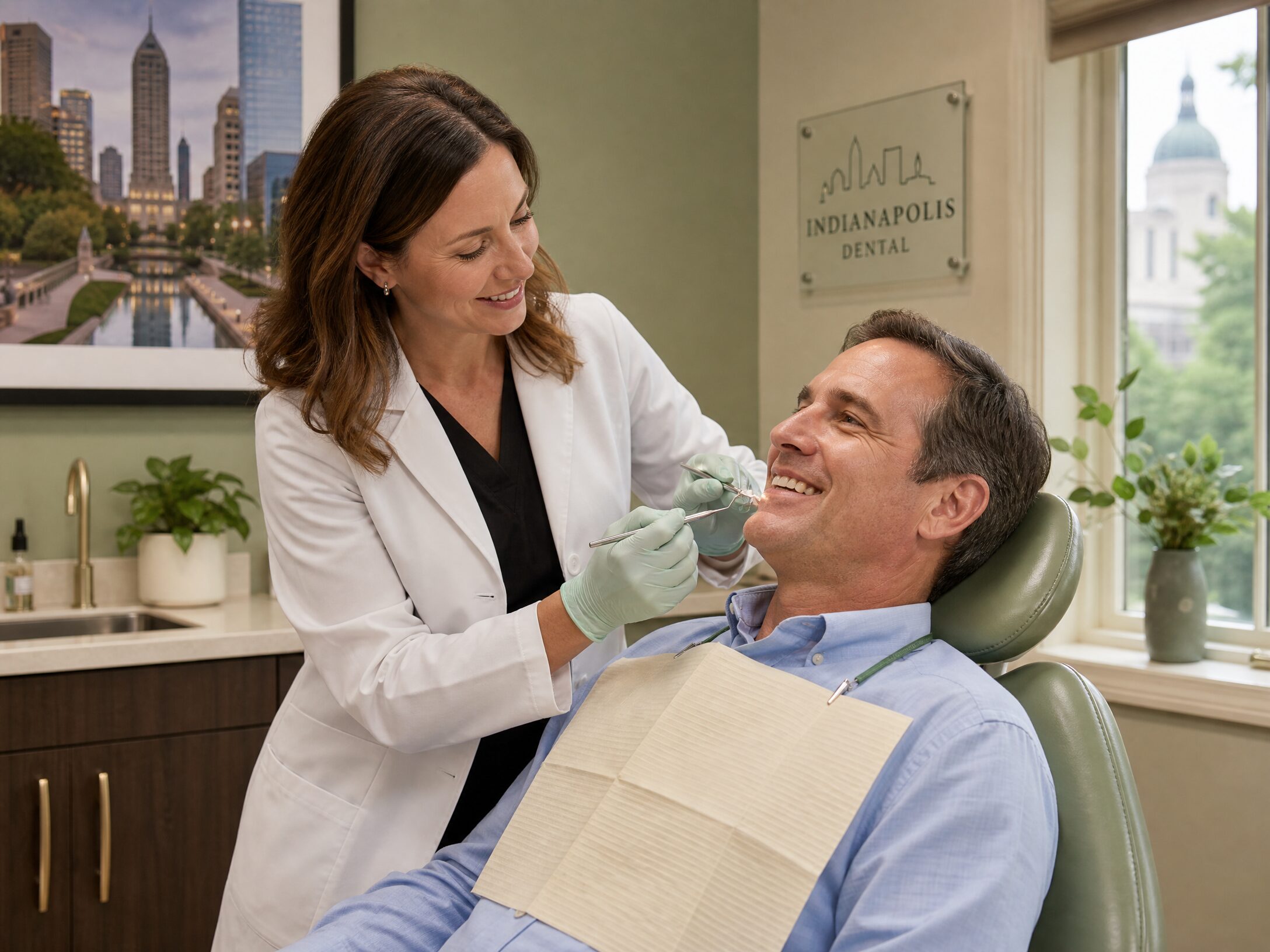
Before a crown, bridge, or denture is permanently placed, we try it in and evaluate the fit, bite, and aesthetics together. If anything needs adjustment — shade, shape, contour, bite — we address it before the final placement. You should leave with a restoration you are genuinely happy with.
This is also why the design process matters. A restoration that is designed correctly from the start requires fewer adjustments and produces a better long-term result.
Comparison
Use this table to understand the key differences between the four main restoration options.
| Feature | Crown | Bridge | Partial Denture | Full Denture |
|---|---|---|---|---|
| Teeth Replaced | 0 (restores existing tooth) | 1–3 missing teeth | Several missing teeth | Full arch |
| Fixed or Removable | ✓ Fixed (cemented) | ✓ Fixed (cemented) | Removable | Removable (or fixed with implants) |
| Preserves Jawbone | N/A | No | No | No (implant versions do) |
| Adjacent Teeth Affected | No | Yes — must be prepared | Minimal (clips on) | None |
| Typical Lifespan | 15–25 years | 10–15 years | 5–10 years | 5–10 years |
| Implant Option Available | ✓ Yes (implant crown) | ✓ Yes (implant bridge) | ✓ Yes (implant overdenture) | ✓ Yes (implant denture) |
Why Carmel Family Dental
Every restoration is shade-matched to your natural teeth using a comprehensive shade guide — so the result blends seamlessly with your existing smile.
Dr. Stuart has placed thousands of crowns, bridges, partials, and dentures over more than 20 years. The experience shows in the fit and aesthetics of every restoration.
We use full zirconia and porcelain-fused-to-zirconia crowns and bridges — the strongest, most natural-looking materials available — not outdated PFM restorations.
All crown and bridge preparations are performed under local anesthesia. Sedation options are available for patients who prefer a more relaxed experience.
CareCredit financing available. PPO insurance benefits verified before treatment begins. Transparent, itemised estimates with no hidden fees.
Hundreds of five-star reviews from patients across Indianapolis, Carmel, Zionsville, Fishers, Westfield, and Noblesville.
Patient Reviews
“I had three crowns placed in one visit and was genuinely surprised by how natural they look. Dr. Stuart spent time matching the shade to my other teeth and the result is seamless. My family cannot tell which ones are crowns. The whole experience was much more comfortable than I expected.”
“I had been wearing an ill-fitting partial from another dentist for years. The new partial from Carmel Family Dental fits perfectly — no sore spots, no slipping, and it looks completely natural. I wish I had come here sooner. The difference in quality is remarkable.”
“My mother needed full dentures and was very anxious about how they would look. Dr. Stuart took the time to select the right tooth shape and shade for her face. She cried when she saw the result — in a good way. They look completely natural. The whole team was so kind throughout the process.”

The goal of every restoration we design is the same: when you smile, no one should be able to tell which teeth are natural and which are restored. That requires attention to shade, shape, surface texture, and translucency — details that make the difference between a restoration that looks artificial and one that looks completely natural.
If you have been living with a damaged tooth, a gap, or an ill-fitting restoration, a consultation is the first step toward understanding what is possible.
Your Restoration Team

Dr. Stuart leads all restorative and prosthetic work at Carmel Family Dental. With over 20 years of experience designing crowns, bridges, partials, and dentures, his expertise in shade matching, bite alignment, and aesthetic design ensures that every restoration looks natural and functions correctly for the long term.

Dr. Schraeder handles the implant-supported component of restorative cases — placing the implant posts that support implant crowns, bridges, and dentures. His experience with over 800 implant placements ensures that the surgical foundation for every implant-supported restoration is precise and reliable.
FAQ
A full denture replaces an entire arch of missing teeth and rests on the gum tissue. A partial denture replaces several missing teeth in an arch where some natural teeth remain — it clips onto those remaining teeth for stability. A dental bridge replaces one to three missing teeth by anchoring crowns onto the natural teeth on either side of the gap, with a false tooth (pontic) suspended between them. The right option depends on how many teeth are missing, the health of remaining teeth, and whether implants are being considered.
Traditional full dentures typically last 5 to 10 years before they need to be replaced or relined. Over time, the jawbone changes shape after tooth loss, causing dentures to become loose and require adjustment. Implant-supported dentures last significantly longer because the implants preserve the jawbone and provide a stable foundation that does not shift with bone changes.
Dental crowns can be made from several materials. Full zirconia crowns are the most durable and natural-looking option, with no metal component. Porcelain-fused-to-zirconia (PFZ) crowns combine the aesthetics of porcelain with the strength of zirconia. Porcelain-fused-to-metal (PFM) crowns are a traditional option. The best material depends on the location of the tooth, bite forces, and aesthetic requirements. We discuss the options at your consultation.
A traditional dental crown typically requires two appointments: the first to prepare the tooth and take impressions, and the second — usually 2 to 3 weeks later — to place the permanent crown. A temporary crown is worn between appointments. In some cases, same-day crowns using in-office milling technology may be available. We will confirm the timeline at your consultation.
Yes. An implant-supported bridge uses dental implants as anchors instead of natural teeth. This is often the preferred option when the adjacent natural teeth are healthy and should not be ground down to support crowns, or when multiple teeth are missing in a row. Implant-supported bridges also preserve the jawbone beneath the gap, which traditional bridges do not.
Most PPO dental insurance plans provide partial coverage for dentures, partials, and bridges — typically covering 50% of the procedure cost after the deductible, up to the annual maximum. Dental crowns are also typically covered at 50% for restorative crowns. We verify your specific benefits before treatment begins and provide a complete, itemised estimate so you know exactly what is covered.
A same-day crown is a dental crown that is designed, milled, and placed in a single appointment using in-office CAD/CAM technology. Instead of taking physical impressions and sending them to an outside dental lab, the tooth is scanned digitally, the crown is designed on a computer, and a milling machine fabricates the crown from a ceramic block in about 15 to 20 minutes. Not all cases are suitable for same-day crowns — we will advise whether this option is appropriate at your consultation.
Dentures and partials should be removed and rinsed after eating, brushed daily with a soft denture brush and non-abrasive denture cleaner, and soaked overnight in a denture-soaking solution or water. They should never be cleaned with regular toothpaste, which is too abrasive. Regular dental check-ups are important to monitor the fit of the denture and the health of the gum tissue and any remaining natural teeth.
Financing & Insurance
We work with most major PPO dental insurance plans and offer flexible financing options to make your restoration as accessible as possible.
Insurance tip: Most PPO plans cover crowns, bridges, partials, and dentures at 50% after the deductible, up to the annual maximum. If your treatment plan involves multiple restorations, we can help you sequence the treatment across plan years to maximise your benefits. We verify your specific coverage before treatment begins.
Related Services
Carmel Family Dental | 3021 E 98th Street, Suite 240, Indianapolis, IN 46280
Serving Indianapolis, Carmel, Zionsville, Fishers, Westfield, and Noblesville